

Curiosity Encounters an Unusual Drilling Event on Mars
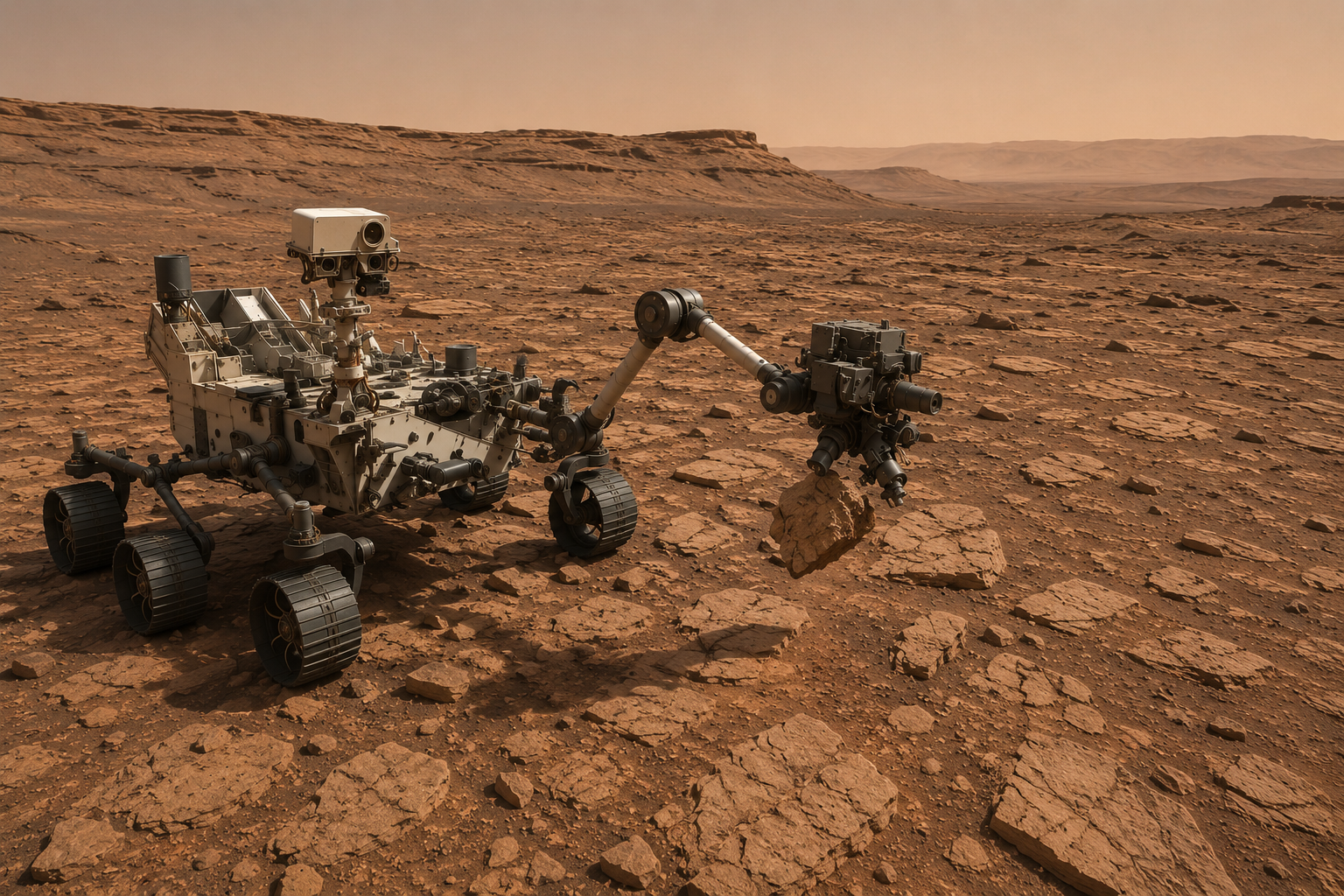
NASA’s Curiosity Mars rover experienced a rare and unexpected event while collecting a rock sample on Mars, temporarily lifting an entire rock from the surface after it became stuck to the rover’s drill system.
The incident occurred on April 25, 2026, during drilling operations on a rock nicknamed “Atacama” inside Gale Crater. According to NASA, the rock measured approximately 1.5 feet wide at its base, around 6 inches thick, and weighed an estimated 28.6 pounds (13 kilograms).
After completing the drilling attempt, Curiosity retracted its robotic arm as normal. However, engineers discovered that the entire rock had lifted from the Martian surface while remaining attached to the drill sleeve surrounding the rotating drill bit.

A First-of-Its-Kind Situation for the Mission
Curiosity has previously fractured layers of Martian rocks during drilling operations, but NASA stated that a rock had never before remained attached to the rover’s drill sleeve after sampling.
The imagery documenting the event was captured using Curiosity’s black-and-white hazard cameras mounted on the front of the rover chassis, along with navigation cameras located on the rover’s mast, often referred to as its “head.”
Engineers initially attempted to free the rock by vibrating the drill system shortly after the event occurred. However, the first effort produced no visible change.
Engineers Attempt Multiple Recovery Procedures
On April 29, mission operators commanded Curiosity to reposition its robotic arm and repeat the vibration procedure. Images from the rover showed sand falling away from the rock during the process, but the rock itself remained firmly attached.
NASA engineers then attempted a more aggressive maneuver on May 1. This time, the rover tilted the drill further, rotated and vibrated the drill assembly, and spun the drill bit simultaneously.
Mission planners initially expected to repeat the procedure multiple times if necessary. Instead, the rock detached during the very first attempt, falling back onto the Martian surface and fracturing on impact.
Curiosity Continues Its Exploration of Gale Crater
Curiosity has been exploring Mars since landing inside Gale Crater in August 2012. The rover’s mission focuses on studying Martian geology, climate history, and the planet’s past potential to support microbial life.
The rover was built by NASA’s Jet Propulsion Laboratory (JPL), which is managed by the California Institute of Technology (Caltech) in Pasadena, California. JPL manages the mission for NASA’s Science Mission Directorate in Washington as part of the agency’s broader Mars Exploration Program.
The unusual drilling incident provides engineers with additional operational data about how Martian rocks respond to drilling and fracture mechanics under Mars’ lower gravity and environmental conditions.
Despite the unexpected challenge, Curiosity successfully resumed normal operations after the rock detached, continuing its long-running scientific mission across the Martian surface.